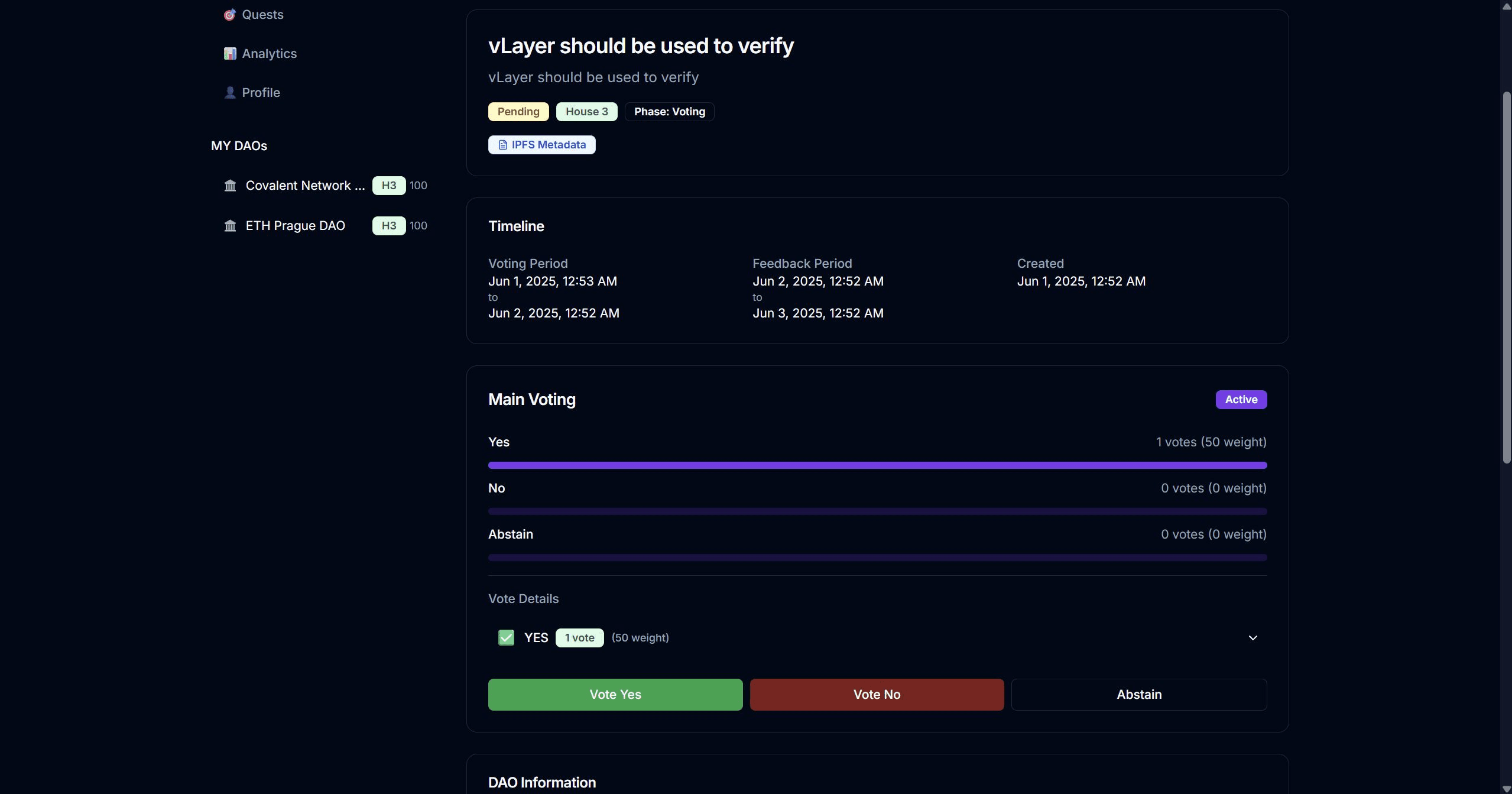
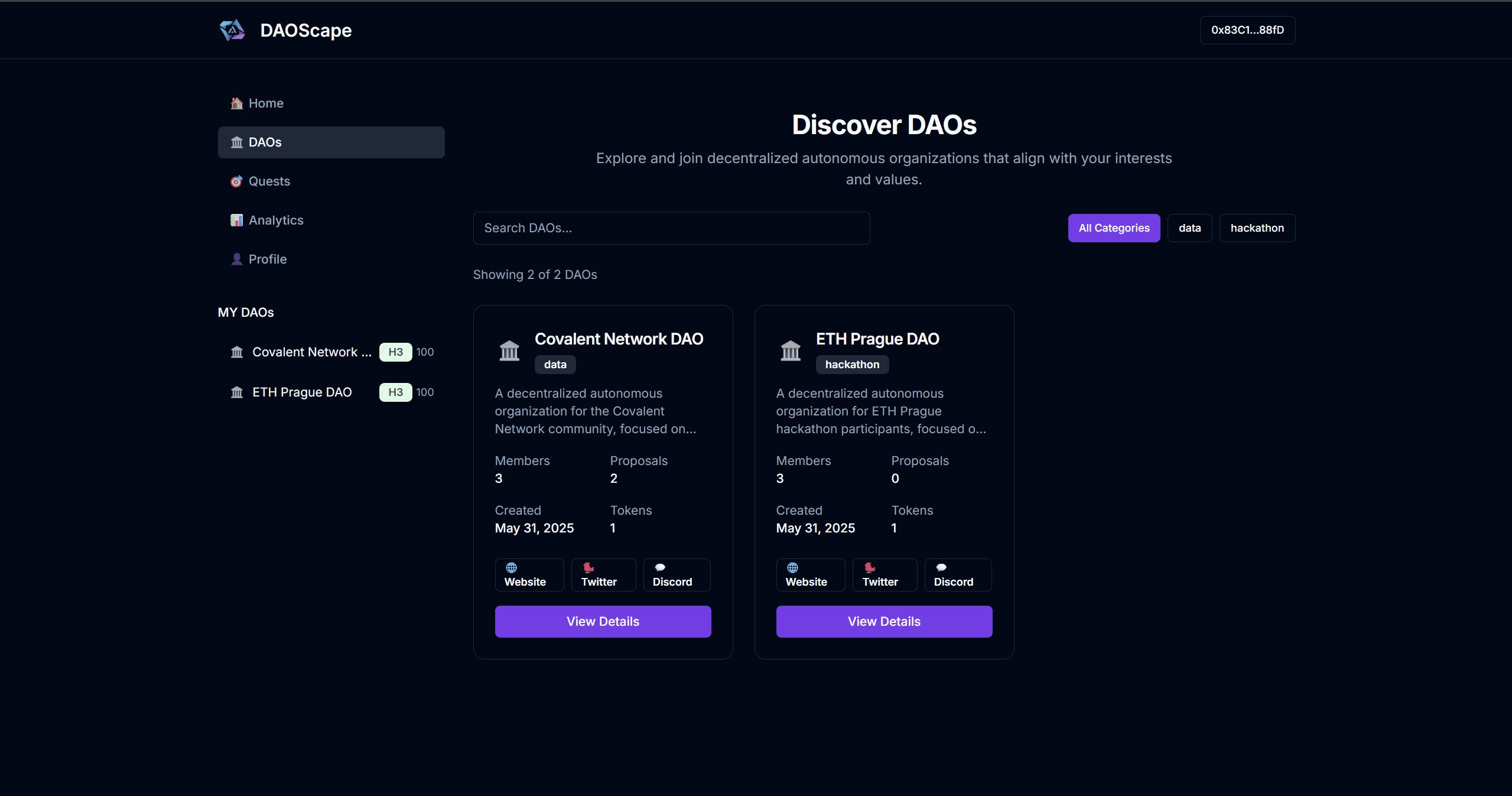
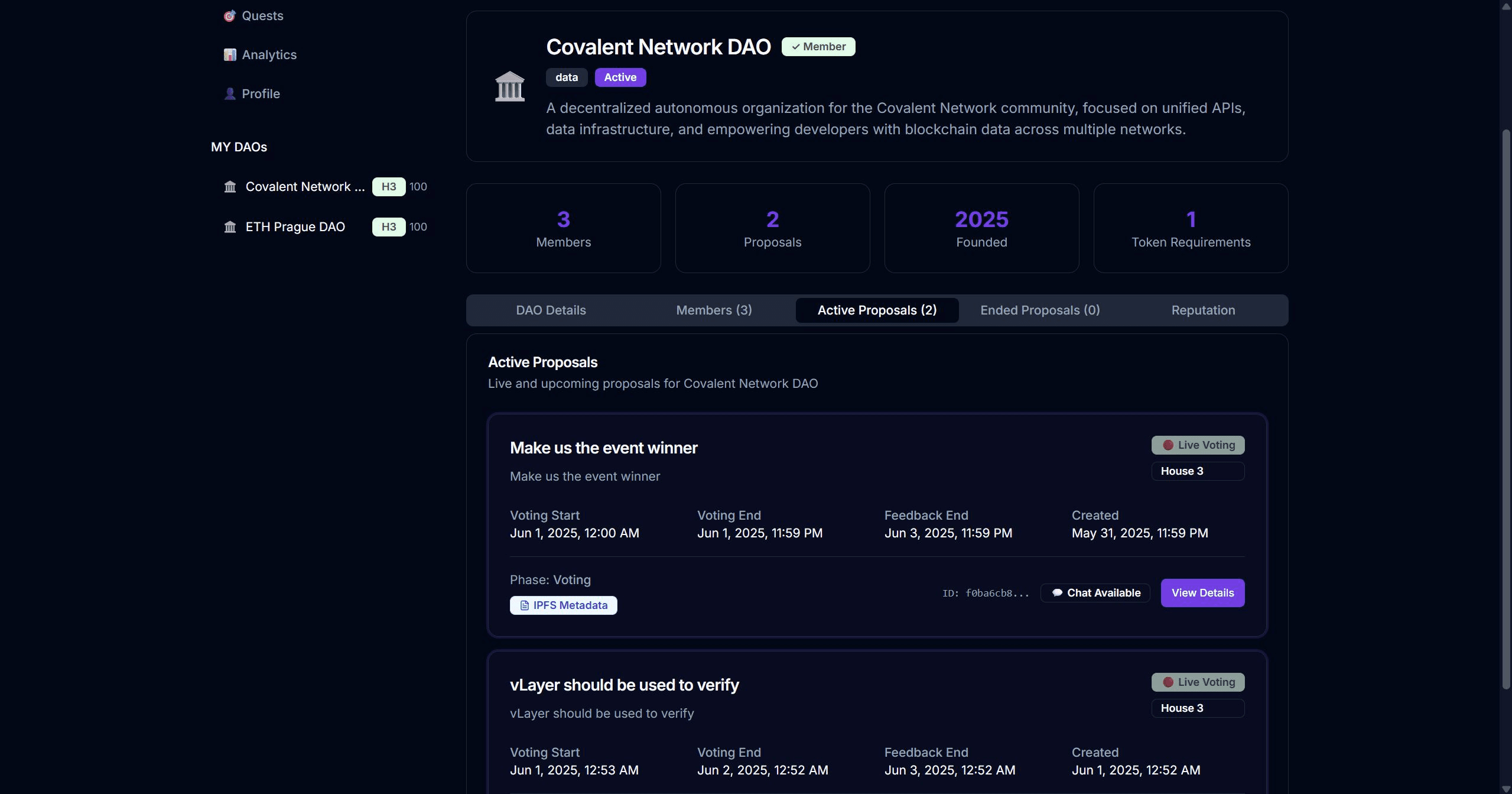
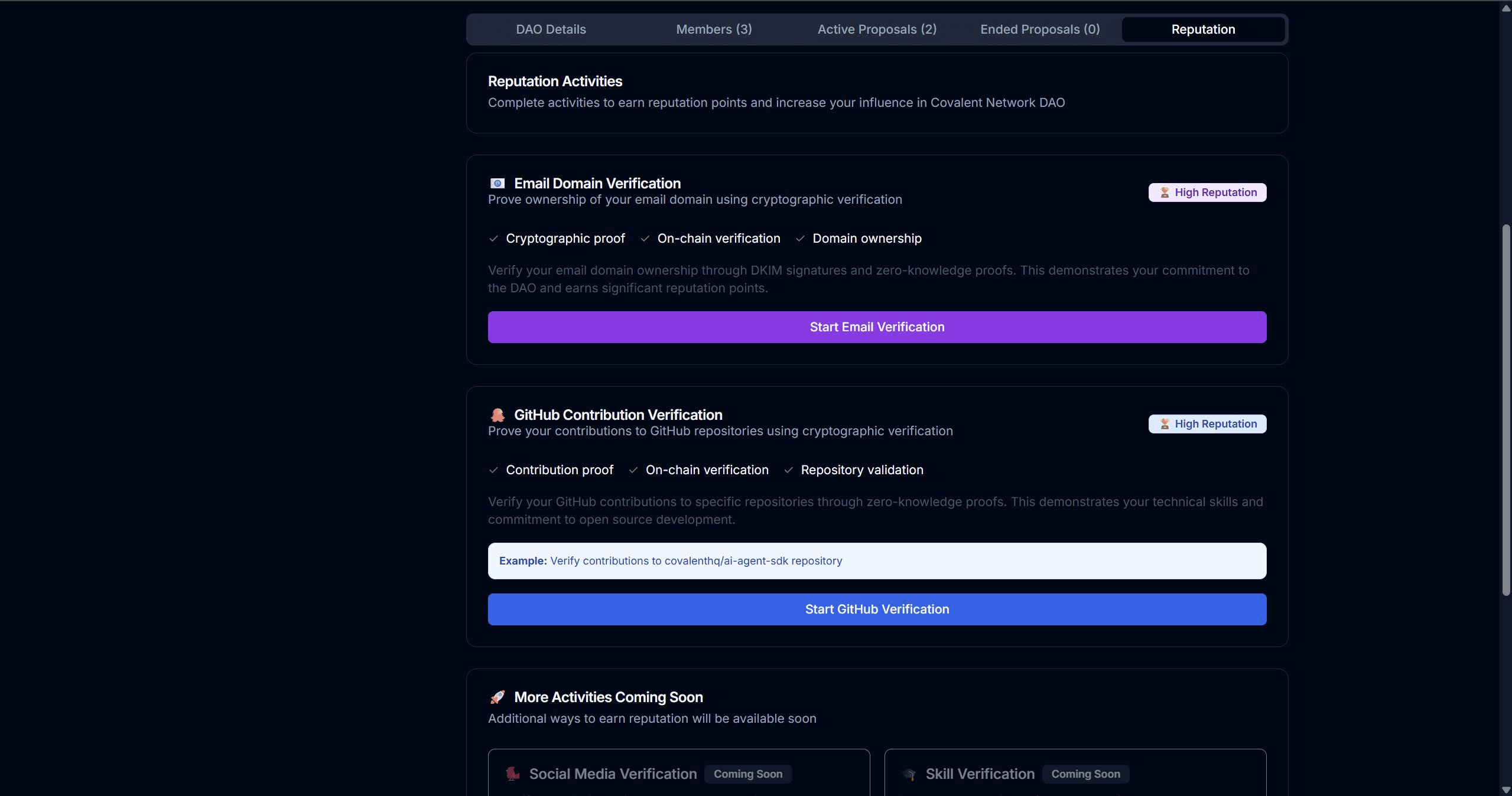
Most DAOs today have a core governance problem: voting power is proportional to token holdings, which creates plutocracies where a handful of whales drown out genuine contributors. DAOScape replaces pure capital-weighted voting with a reputation-based system that rewards real participation: verified social presence, email domain ownership, and open-source contributions, so that influence is earned rather than bought.
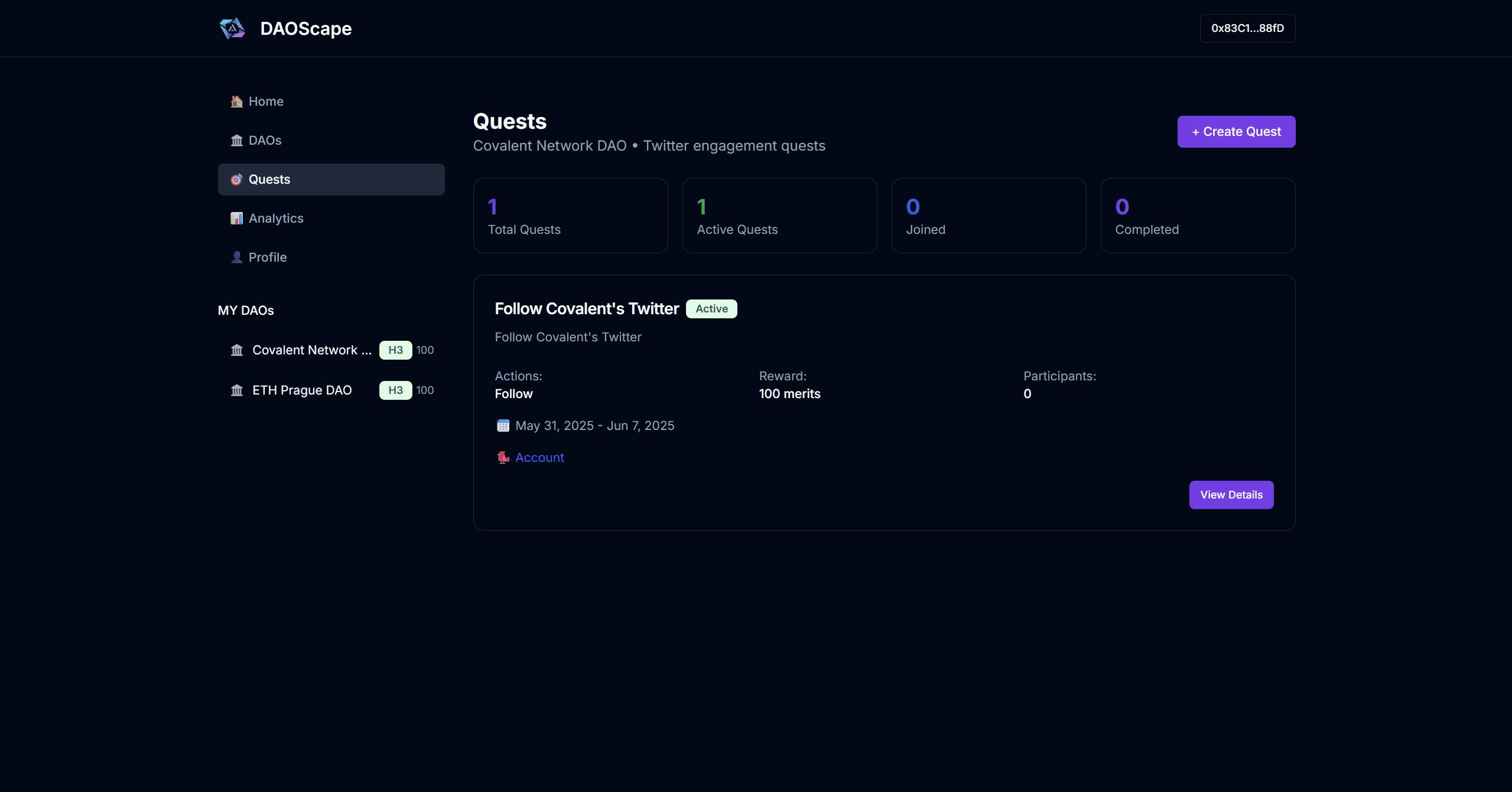
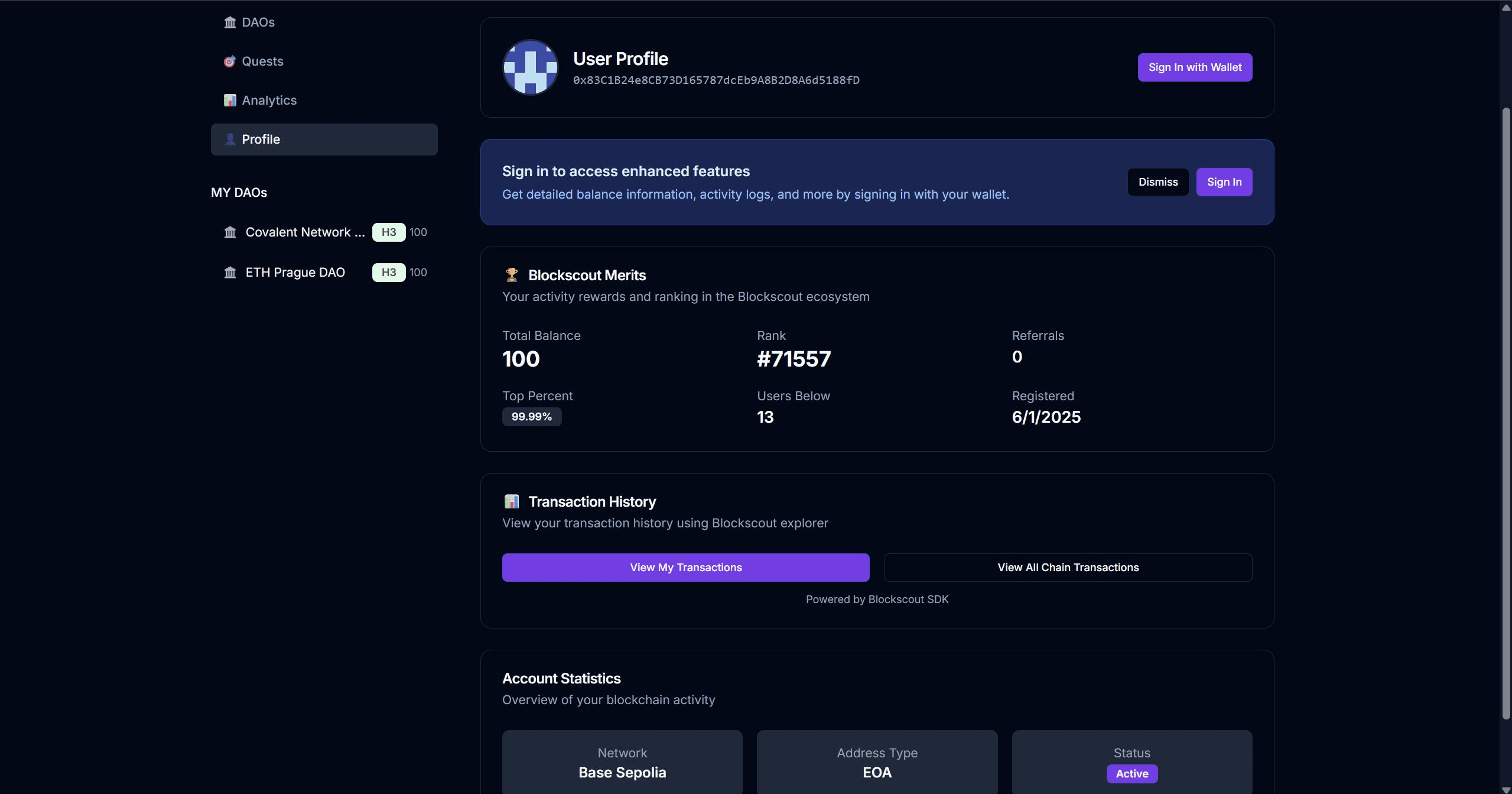
The platform runs on a multi-dimensional reputation engine powered by vlayer's Web Proof technology, which generates zero-knowledge proofs for Twitter follows, GitHub activity, and email domains, confirming identity claims cryptographically without exposing raw credentials or requiring API keys. These verified signals feed into a voting weight formula where reputation carries the highest exponent, deliberately outweighing token balance. Smart contracts are written in Solidity with Foundry and deployed on Base Sepolia. Blockscout powers on-chain analytics and wallet profiling, and 1inch Protocol handles DAO treasury management. A Quests system lets DAOs define engagement tasks with merit rewards.
I architected the full stack: the React 18 + TypeScript frontend with wagmi v2/viem v2 wallet integration, the Node.js microservices backend backed by Supabase, and the ZKP-integrated smart contract layer. The hardest challenge was integrating vlayer's Web Proof circuit into the reputation scoring pipeline in a way that remained composable across multiple proof types without leaking user data on-chain.
DAOScape won the Blockscout Big Blockscout Explorer Pool Prize at ETHGlobal Prague 2025.