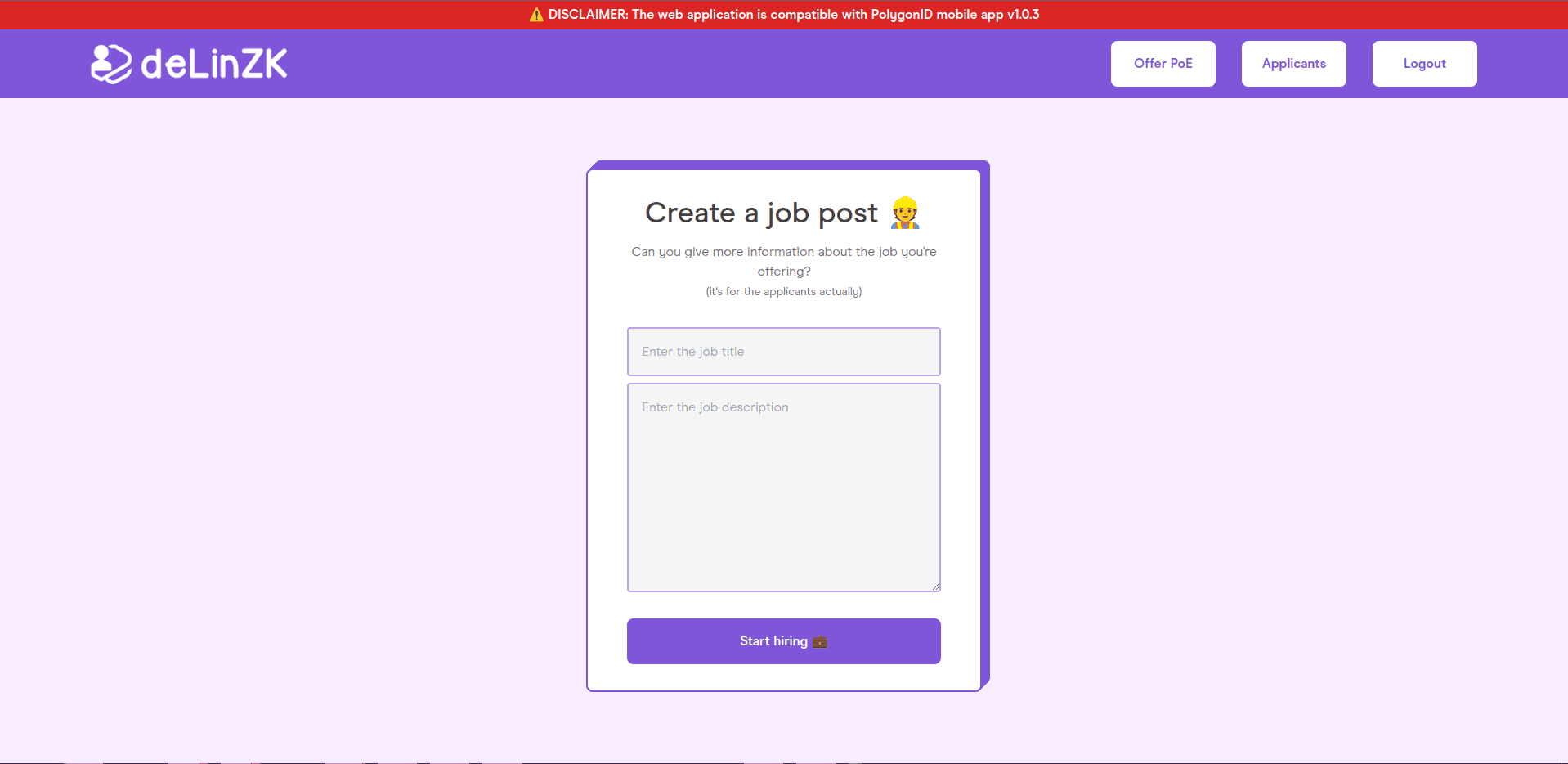
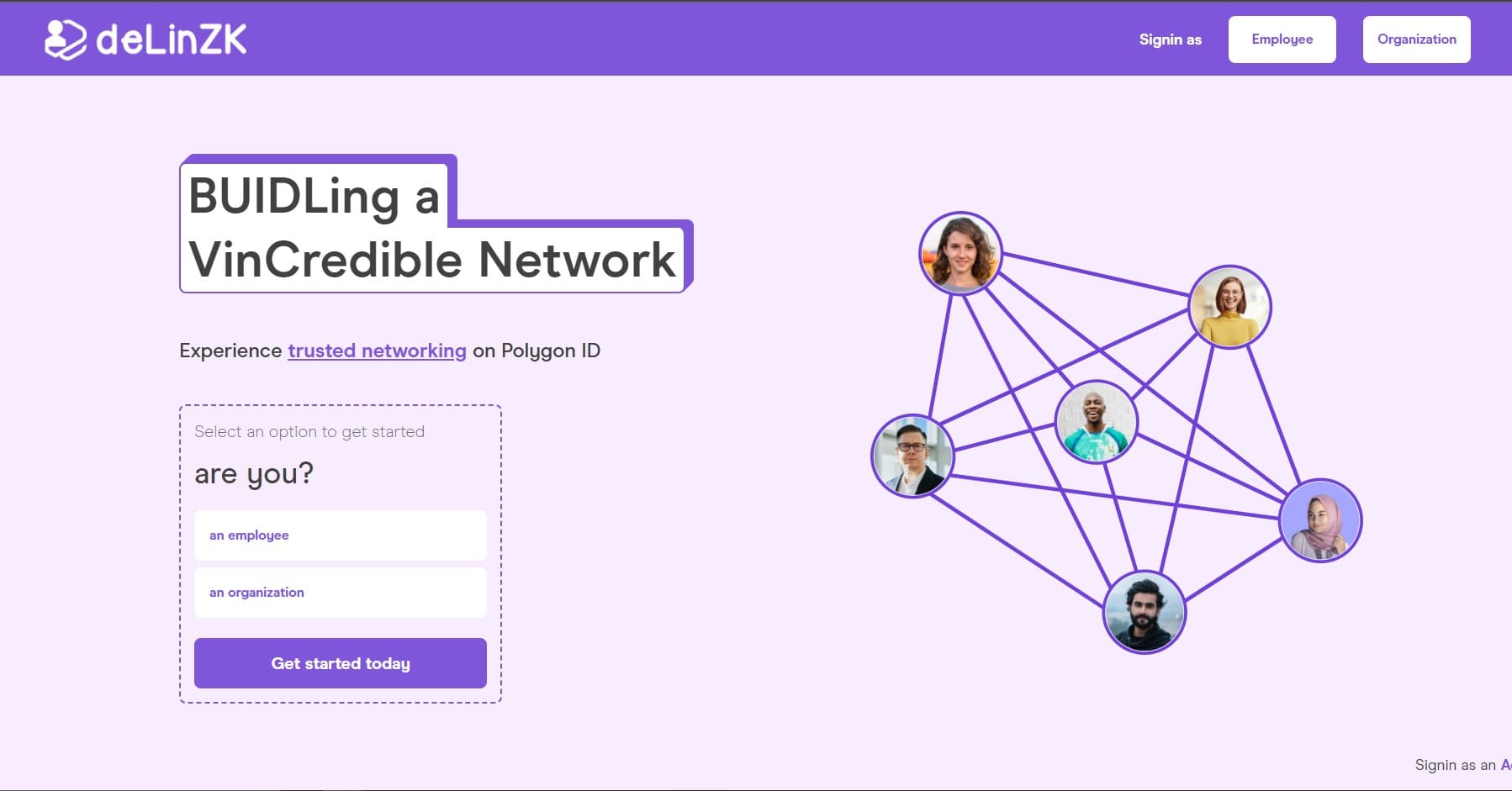
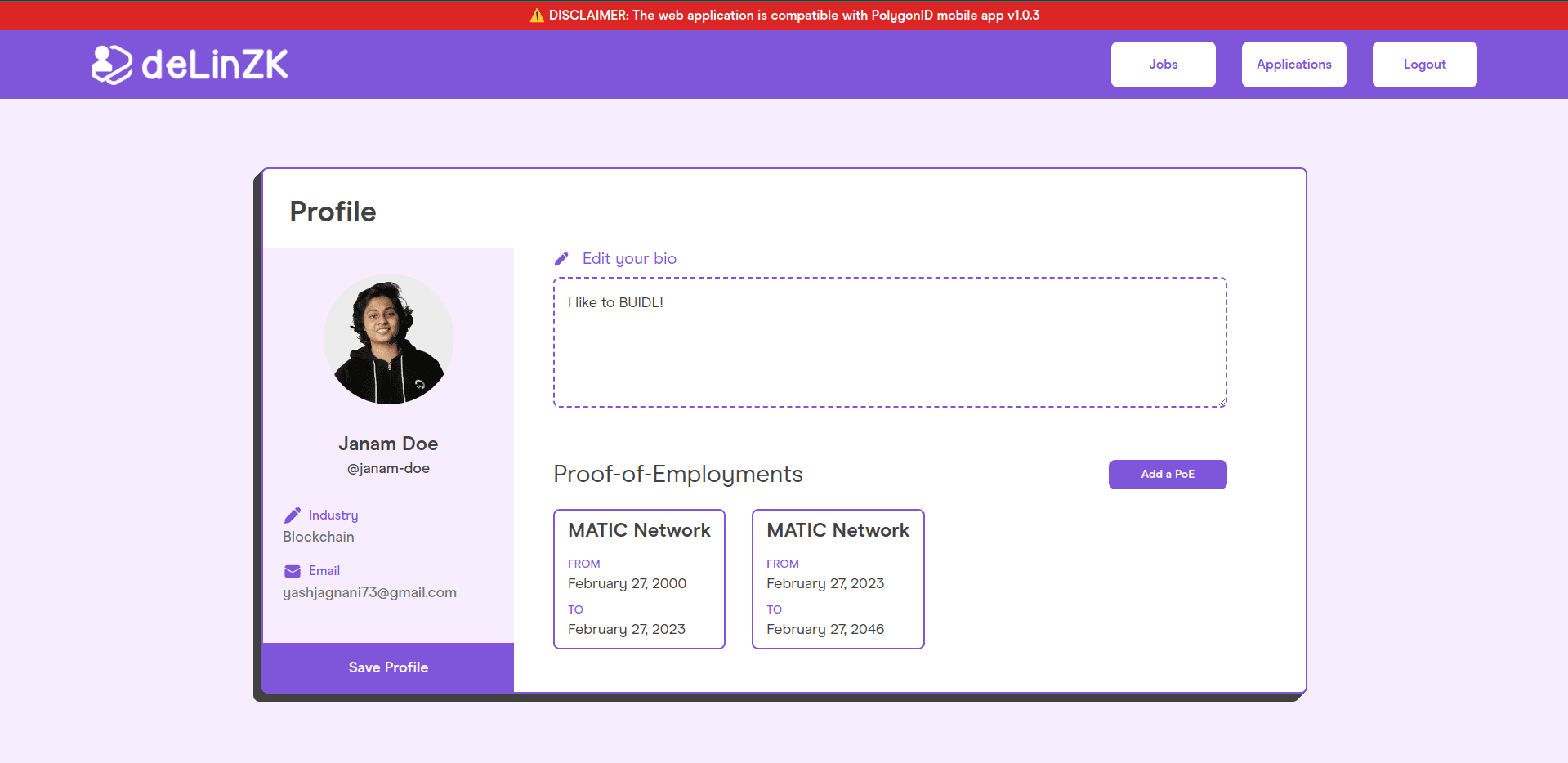
Professional networks like LinkedIn have a trust problem: anyone can list a job title or claim years of experience with no mechanism for verification. Background checks are slow, expensive, and invasive: they harvest personal data and still fail to provide cryptographic guarantees. deLinZK was built to eliminate this entirely by replacing trust-me credentials with mathematically unforgeable ones.
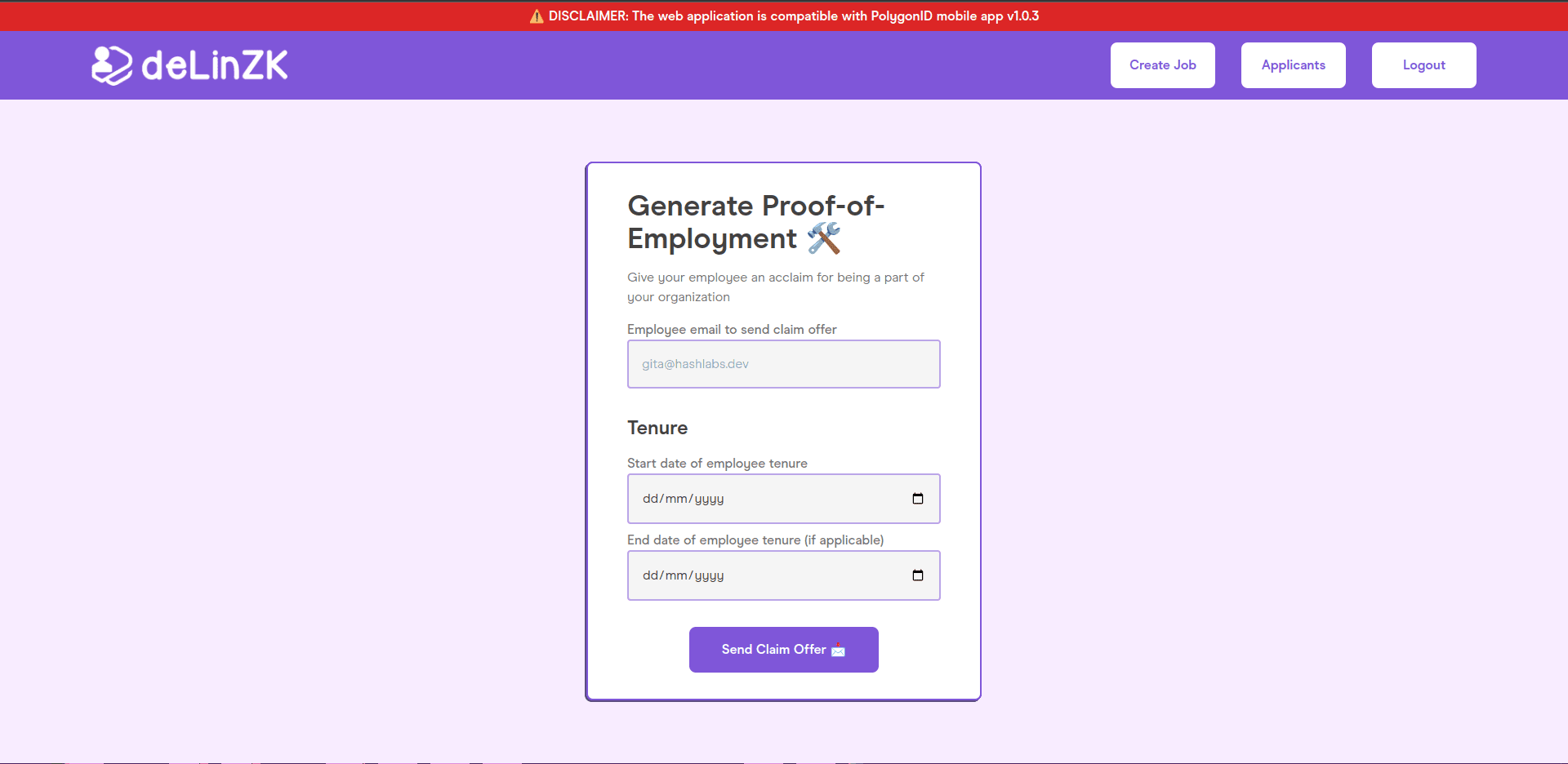
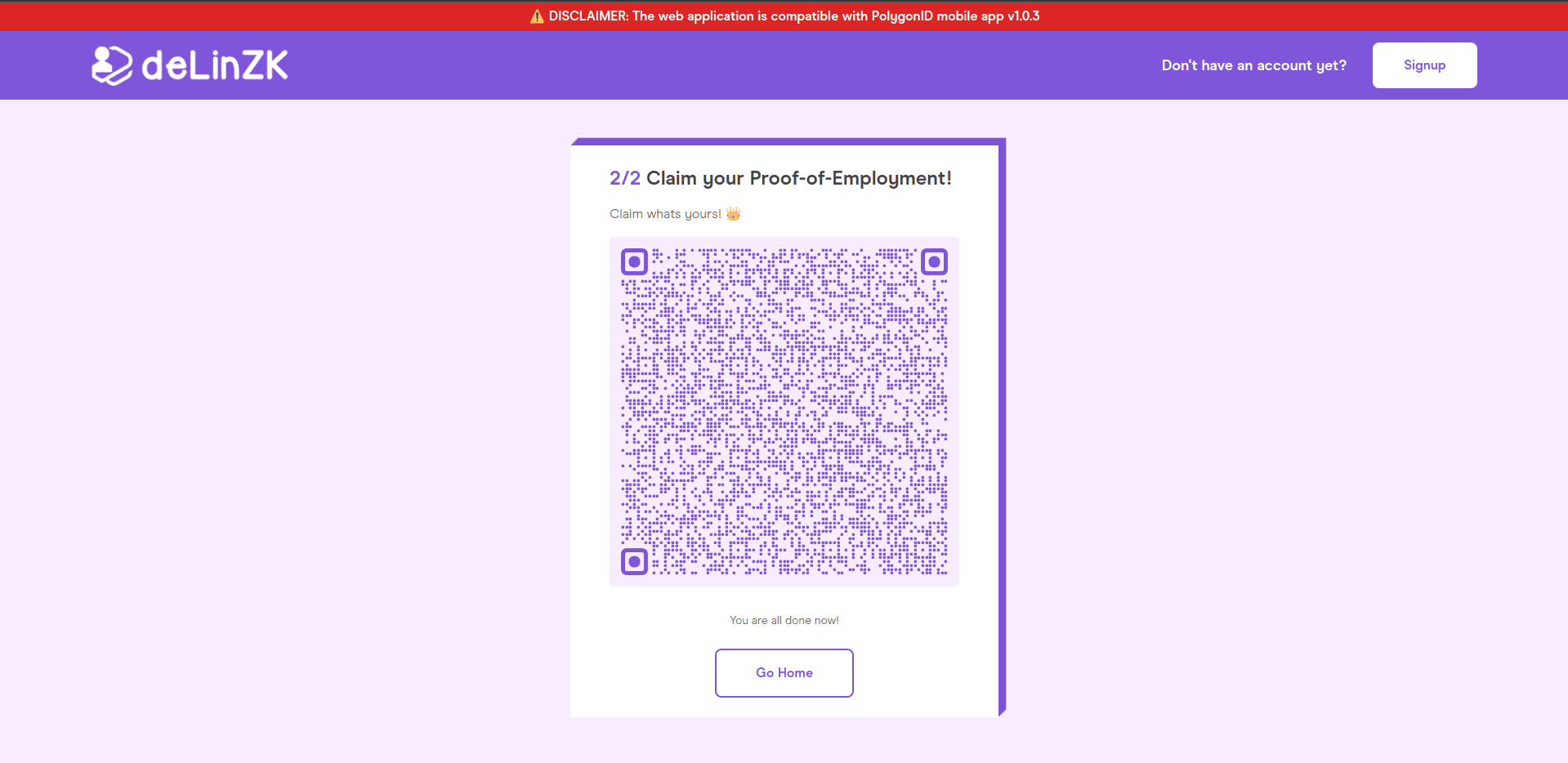
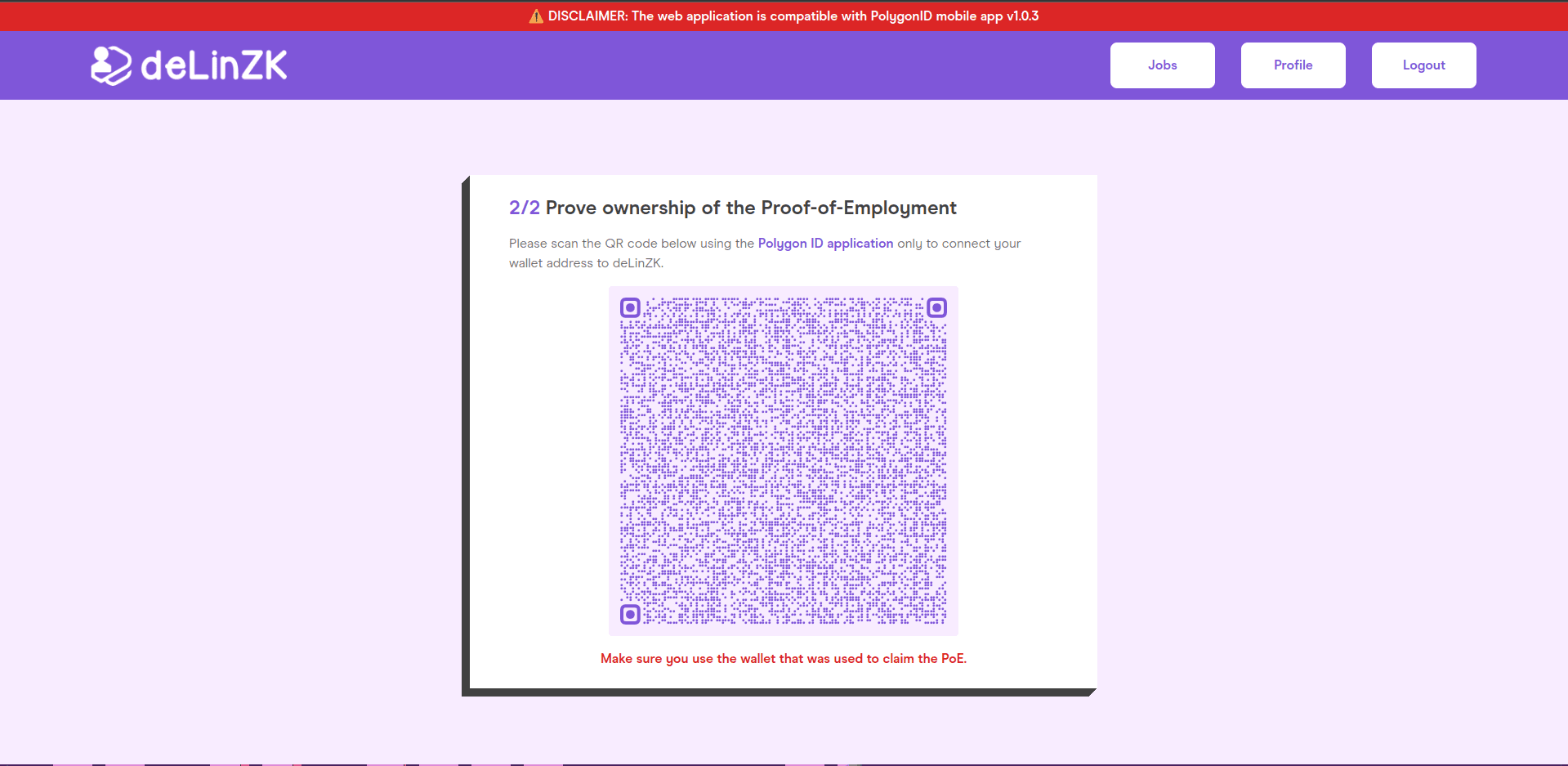
The platform uses Polygon ID and the Iden3 credential framework to issue Verifiable Credentials as Proof-of-Employment. When an organization onboards (after admin verification of legitimacy), it can issue a ZK credential to an employee encoding their employment tenure. That credential is stored in the employee's identity wallet, and when they apply to a job on the integrated job board, they generate a Zero-Knowledge Proof that proves employment without revealing any underlying personal data. Redis manages real-time state across the WebSocket and REST layers, while Supabase handles persistence and Next.js drives the frontend.
I designed and built the full ZK credential issuance and verification flow. Polygon ID imposes a 15-digit integer constraint on credential attributes, which made encoding employment tenure into a single field a real puzzle. I solved it by applying SHAKE-128 hashing, converting the output to hexadecimal and then to decimal radix to produce compact 48-bit values that fit within the constraint while remaining uniquely deterministic. I also implemented the privacy-first authentication layer, replacing JWTs entirely with ZK proofs so that user emails are used only for communication, never for identity.
Built at ETHForAll Online VIII, deLinZK demonstrates what a credential layer for the professional web could look like when privacy and verifiability are non-negotiable first principles.