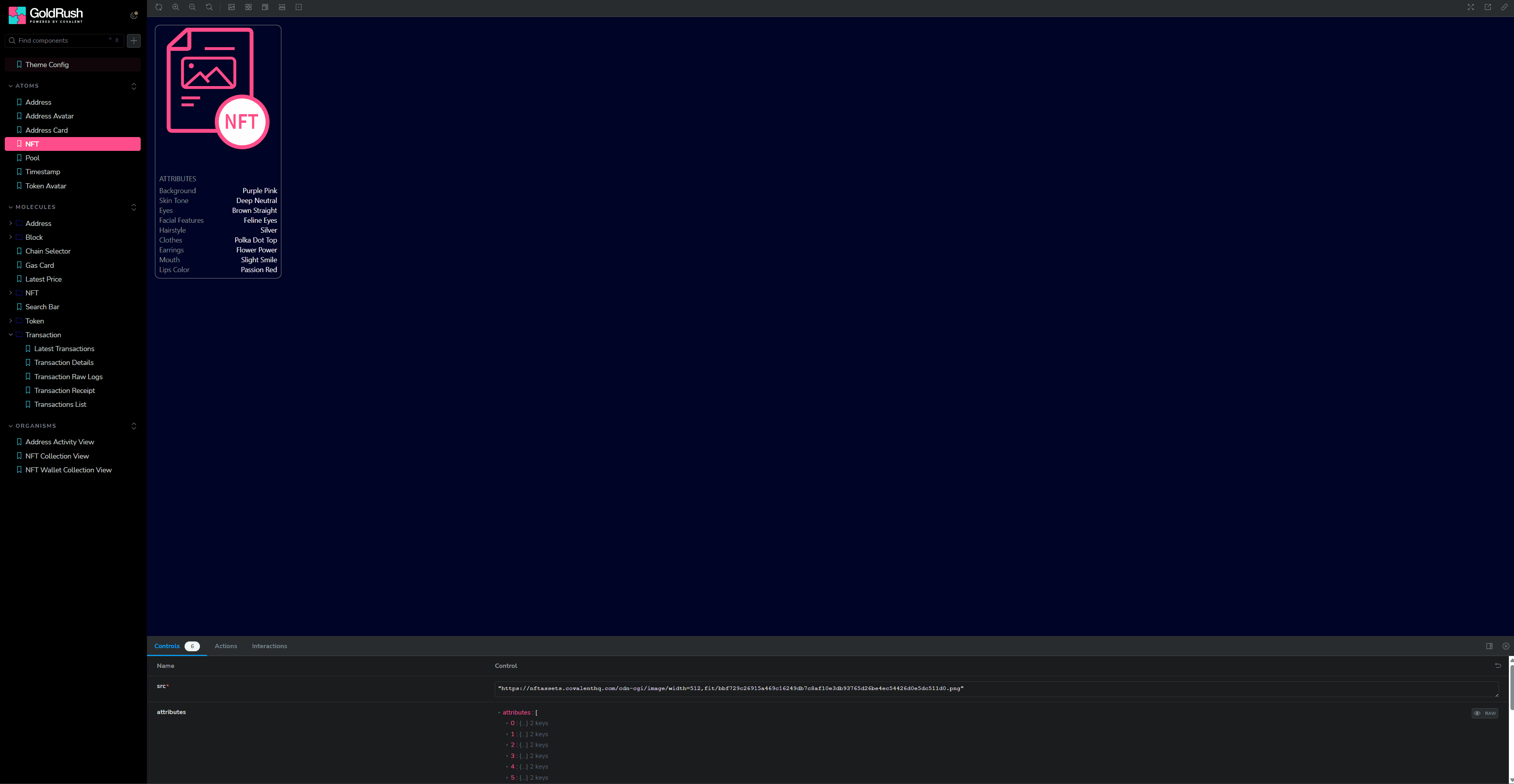
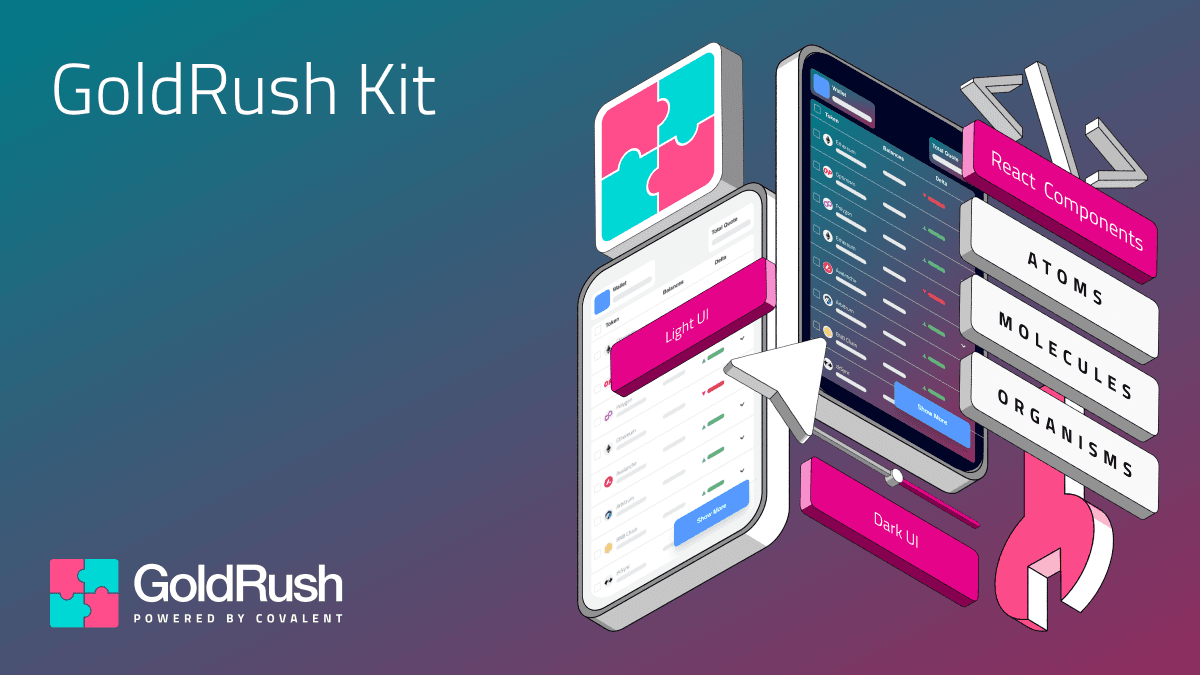
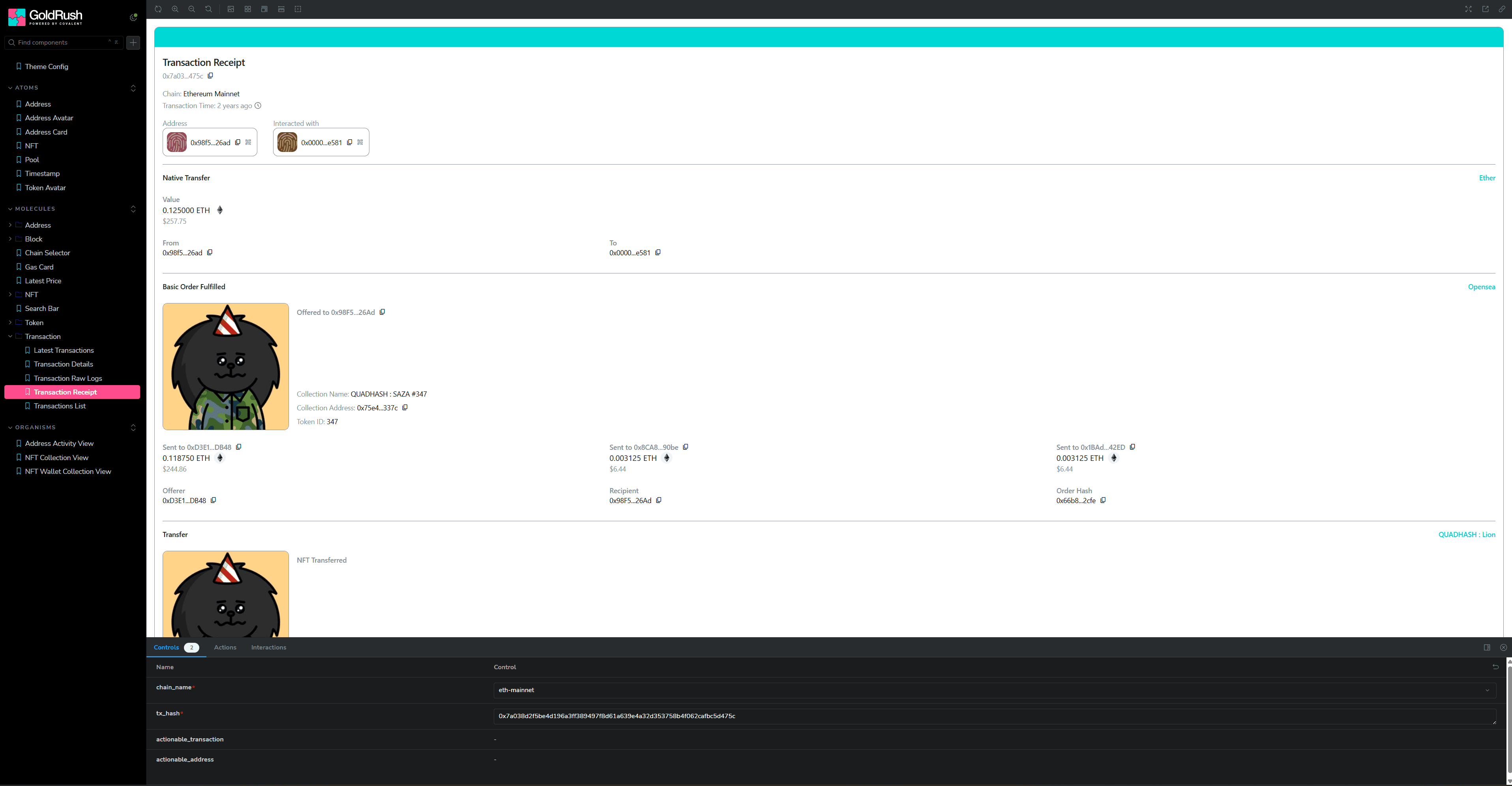
GoldRush Kit is a plug-n-play React component library that cuts out the most painful part of building web3 frontends: wiring up blockchain data. Instead of writing custom hooks, parsing raw RPC responses, and manually normalizing data across dozens of chains, you drop in a pre-built component (token balances, NFT galleries, transaction receipts, block explorers), wrap it in a GoldRushProvider, and the data fetches itself. The library was built at CovalentHQ to make multi-chain dApp development approachable for any React developer.
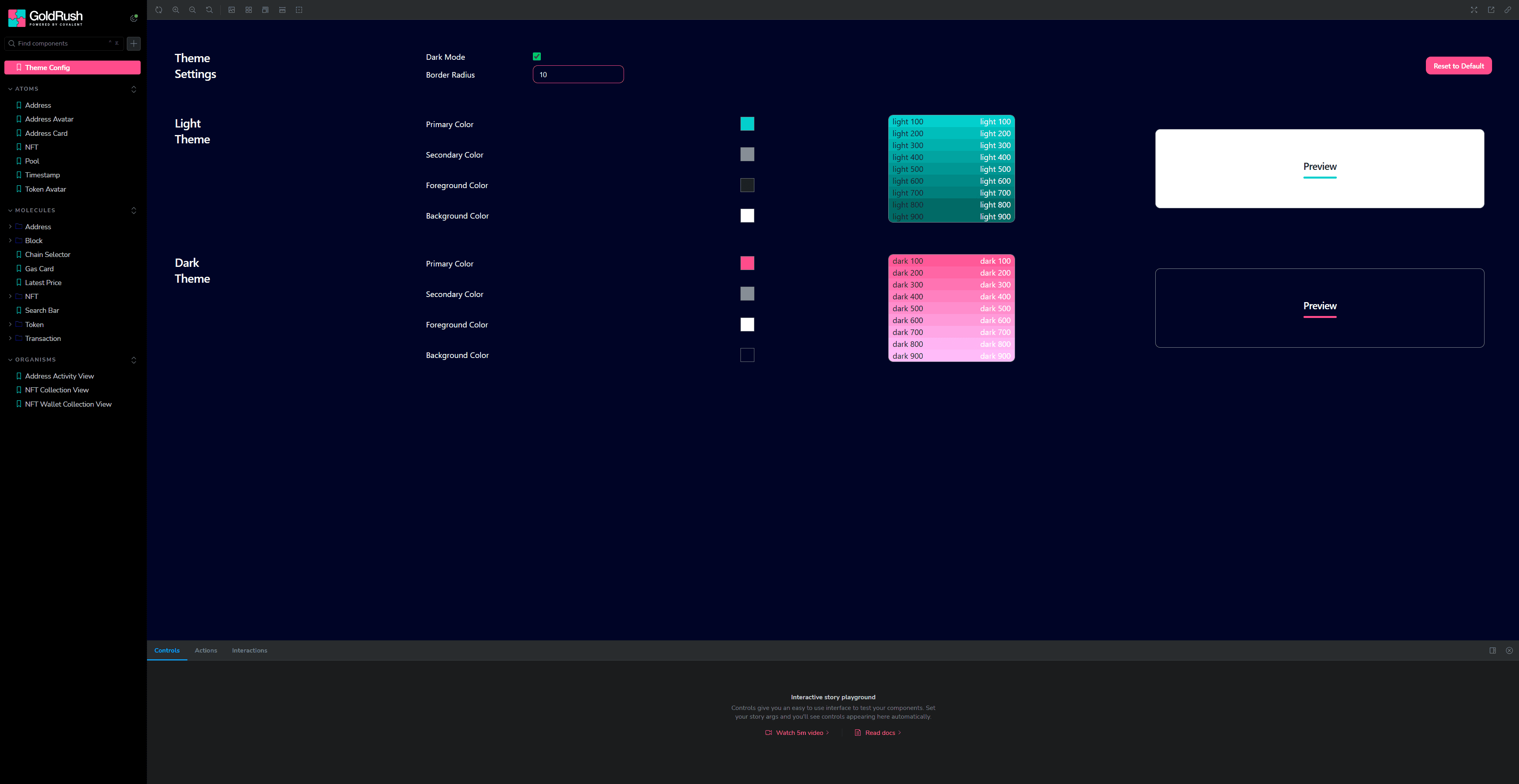
Architecturally, the library is built on React, TypeScript, and TailwindCSS, with every component driven by the GoldRush TypeScript SDK, Covalent's unified API client that normalizes on-chain data across 200+ blockchains. Components follow an atomic design hierarchy (atoms to molecules to organisms), making them individually consumable or composable into full-page templates. The theming system uses a GoldRushProvider context that propagates a configurable theme object (controlling light/dark mode, primary color, background, foreground, and border radius) down to every component without any CSS overrides. A live Storybook environment serves as both documentation and interactive preview.
I owned the library across the v1.0.x release cycle, driving it from v1.0.1 through v1.0.5. I shipped state-preserving pagination for block lists, raw transaction log display, in/out direction indicators on transaction lists, and chain-switching in the address activity component. The hardest challenge was getting gas and fee unit formatting precisely right: ETH values, Gwei, and Wei are easy to conflate across different API response shapes, and subtle unit errors at the display layer directly erode user trust in the data.
The library shipped 65 versions on npm under @covalenthq/goldrush-kit, accumulated 105 GitHub stars and 57 forks, and spawned four actively maintained official templates.