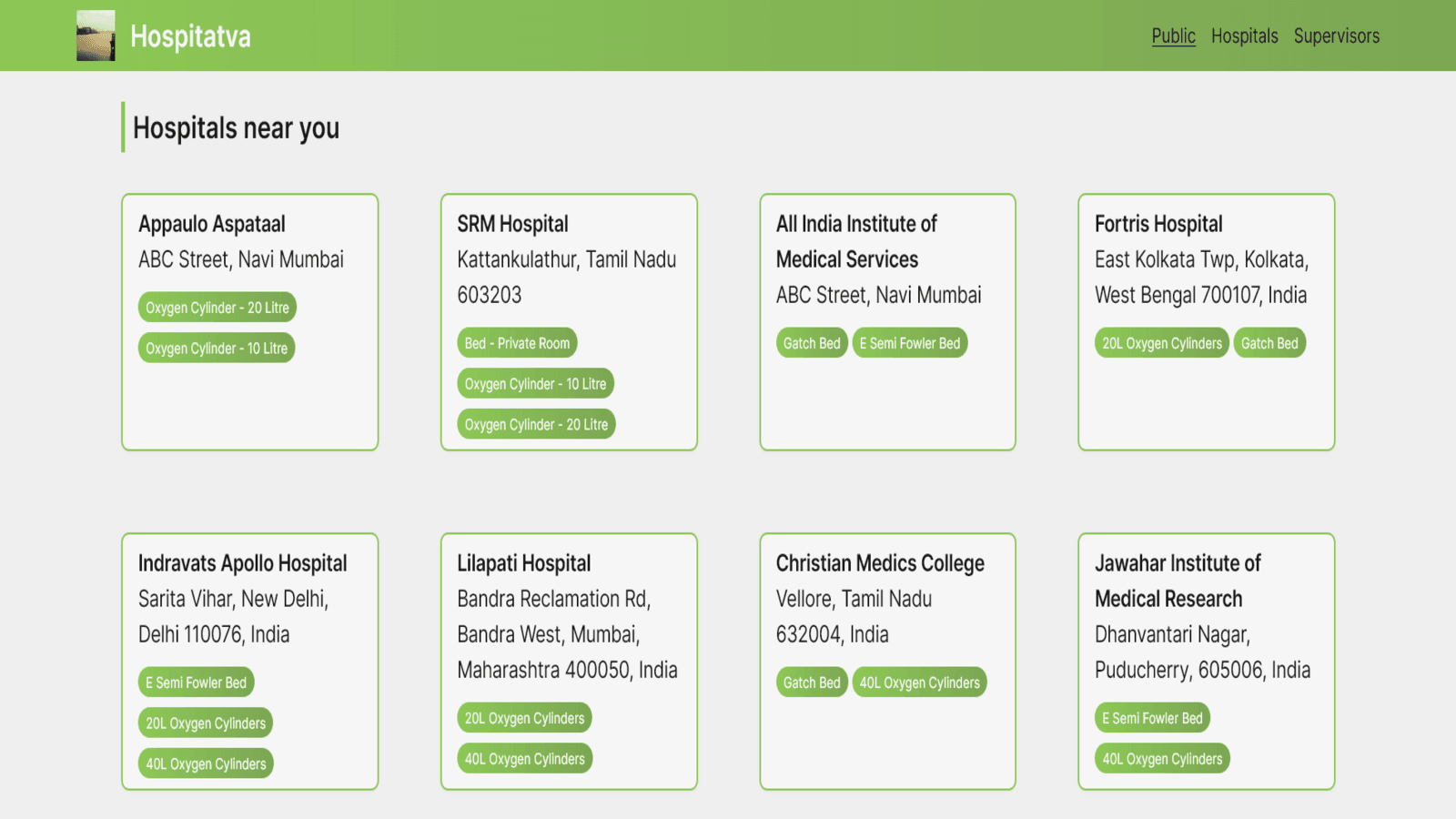
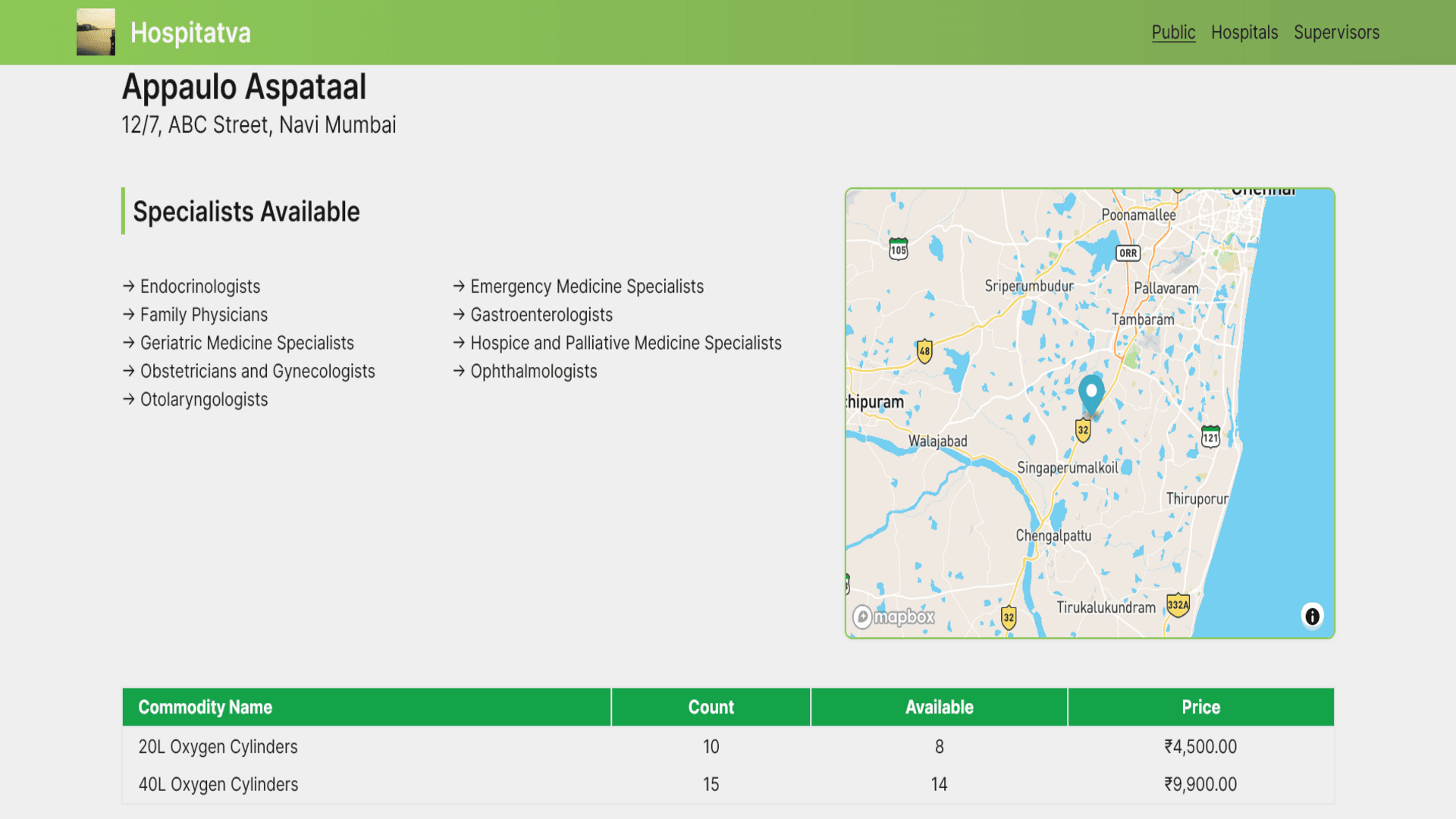
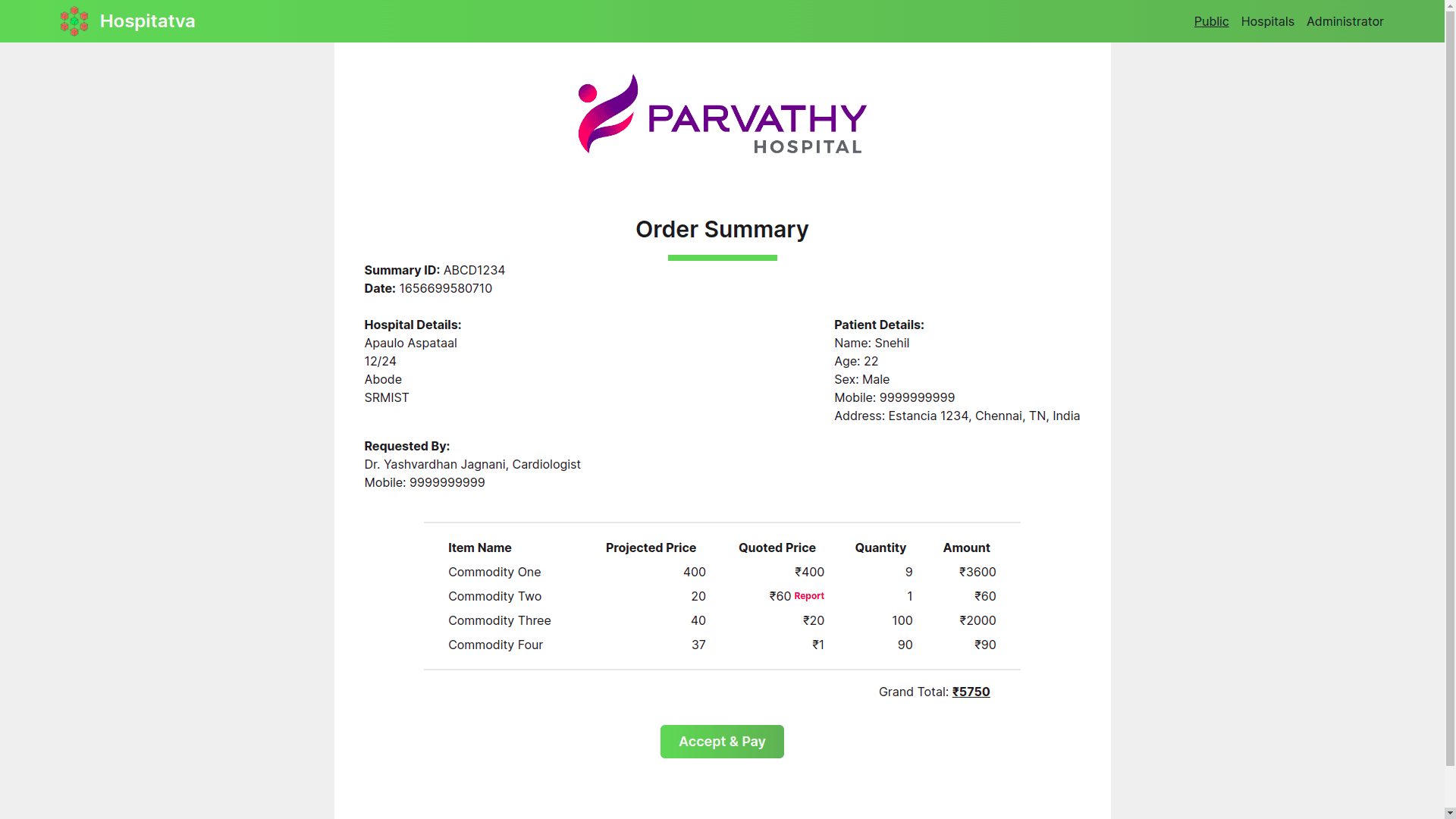
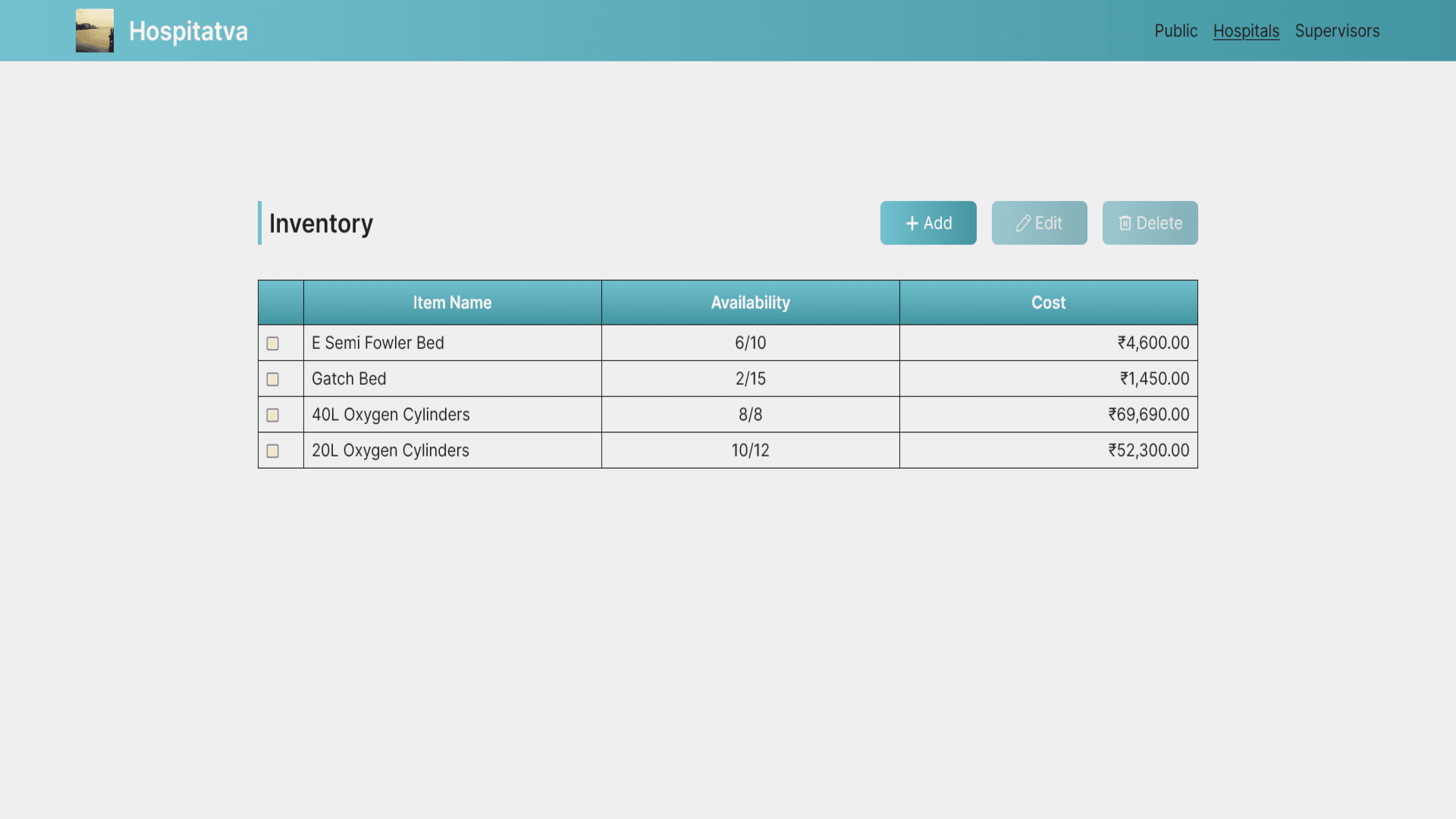
During the COVID-19 pandemic, private hospitals across India engaged in rampant price gouging: inflating costs for beds, oxygen, and treatments while opacity around resource availability left patients and families helpless. Hospitatva was built to directly confront this, providing a national information portal that brings full transparency to hospital pricing and commodity availability.
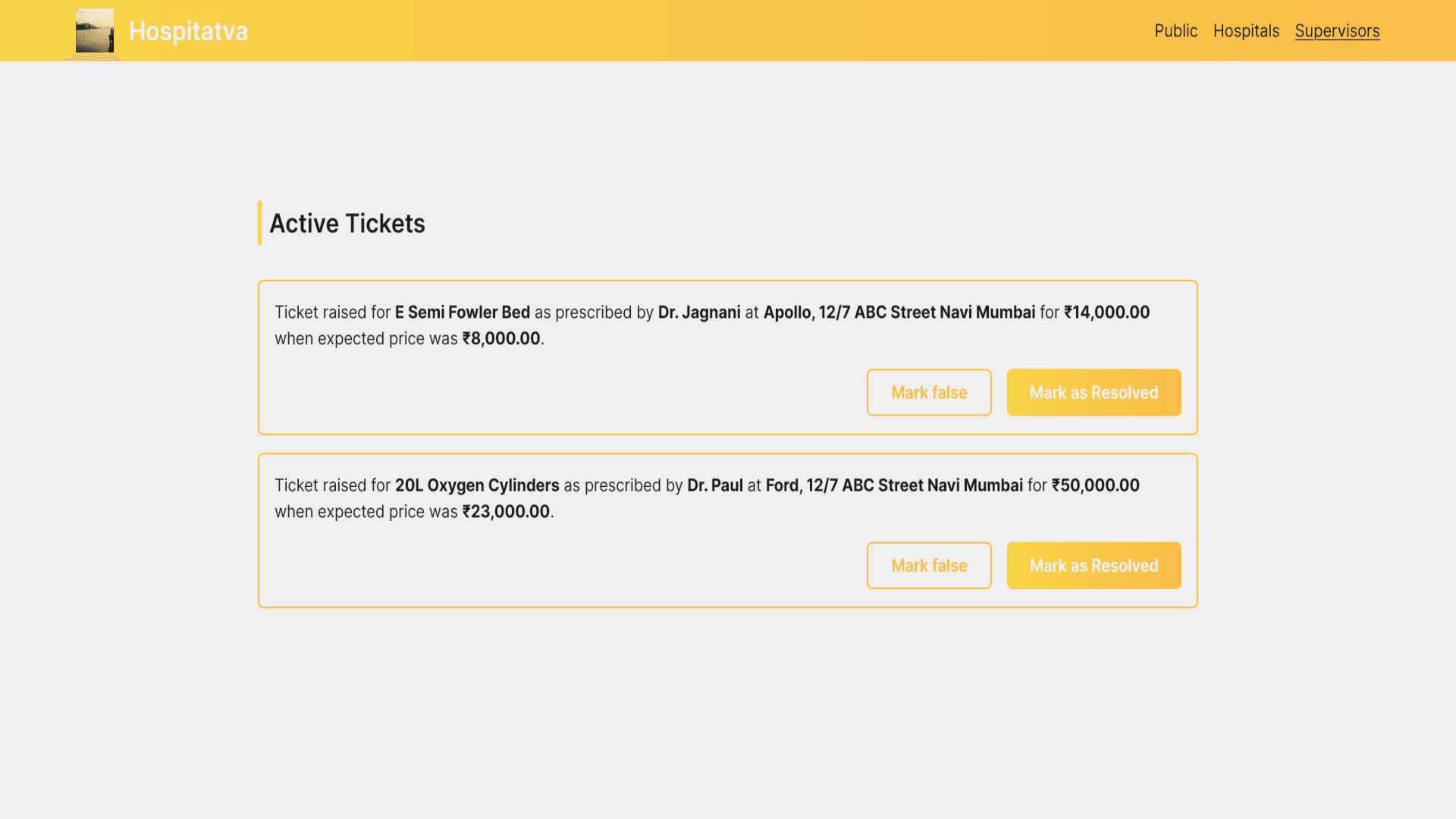
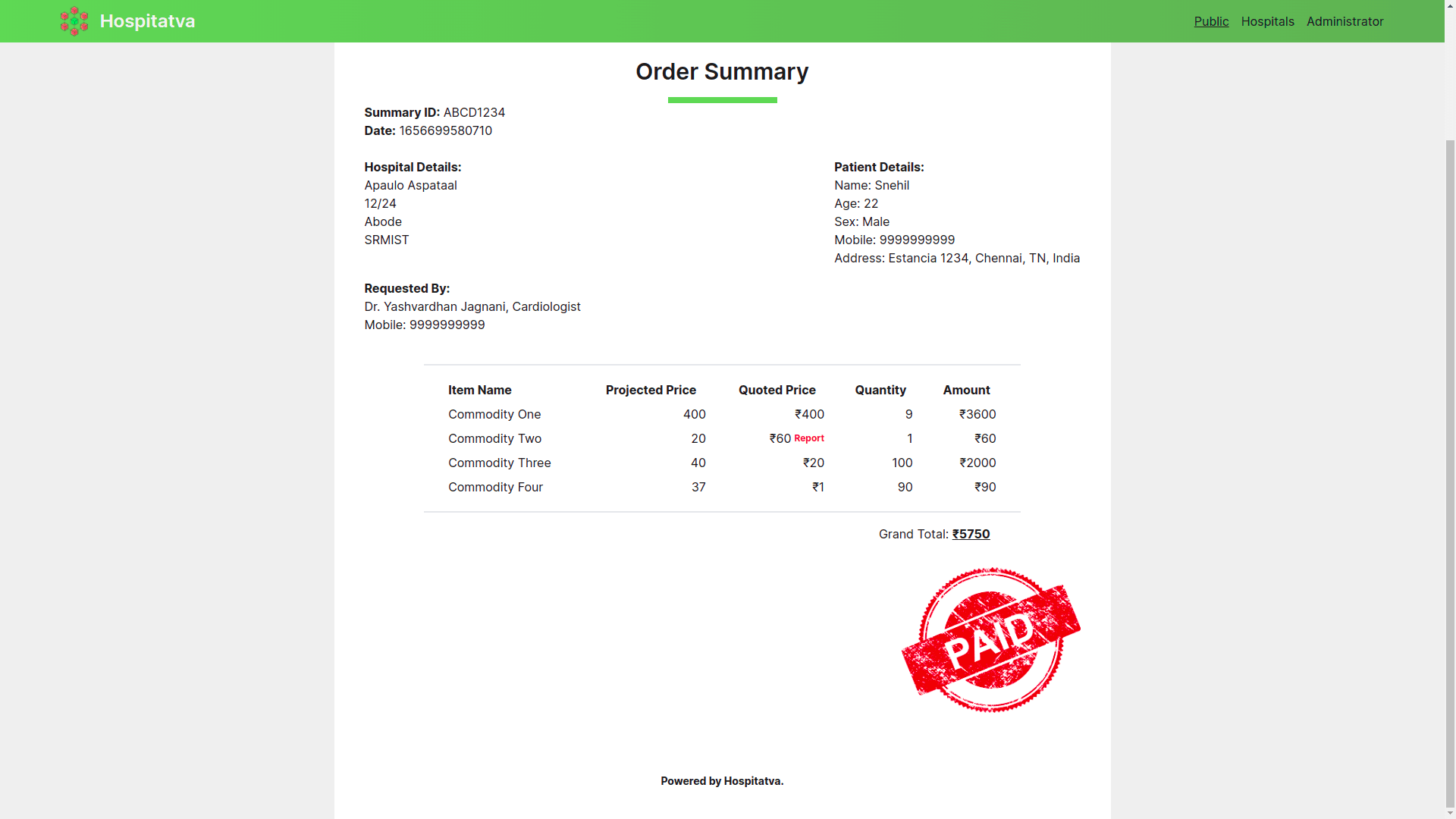
Hospitatva is a distributed ledger system built on the Zilliqa blockchain, using Scilla smart contracts to immutably record the rates hospitals propose and charge, as well as real-time commodity counts. A three-portal architecture serves patients, hospital staff, and government officials: patients can browse hospitals, verify pricing against government benchmarks, and flag anomalies, while officials receive and review those complaints through a supervised legitimacy pipeline. A 30-input ML price prediction model (scikit-learn / TensorFlow) detects billing anomalies before invoices are finalized.
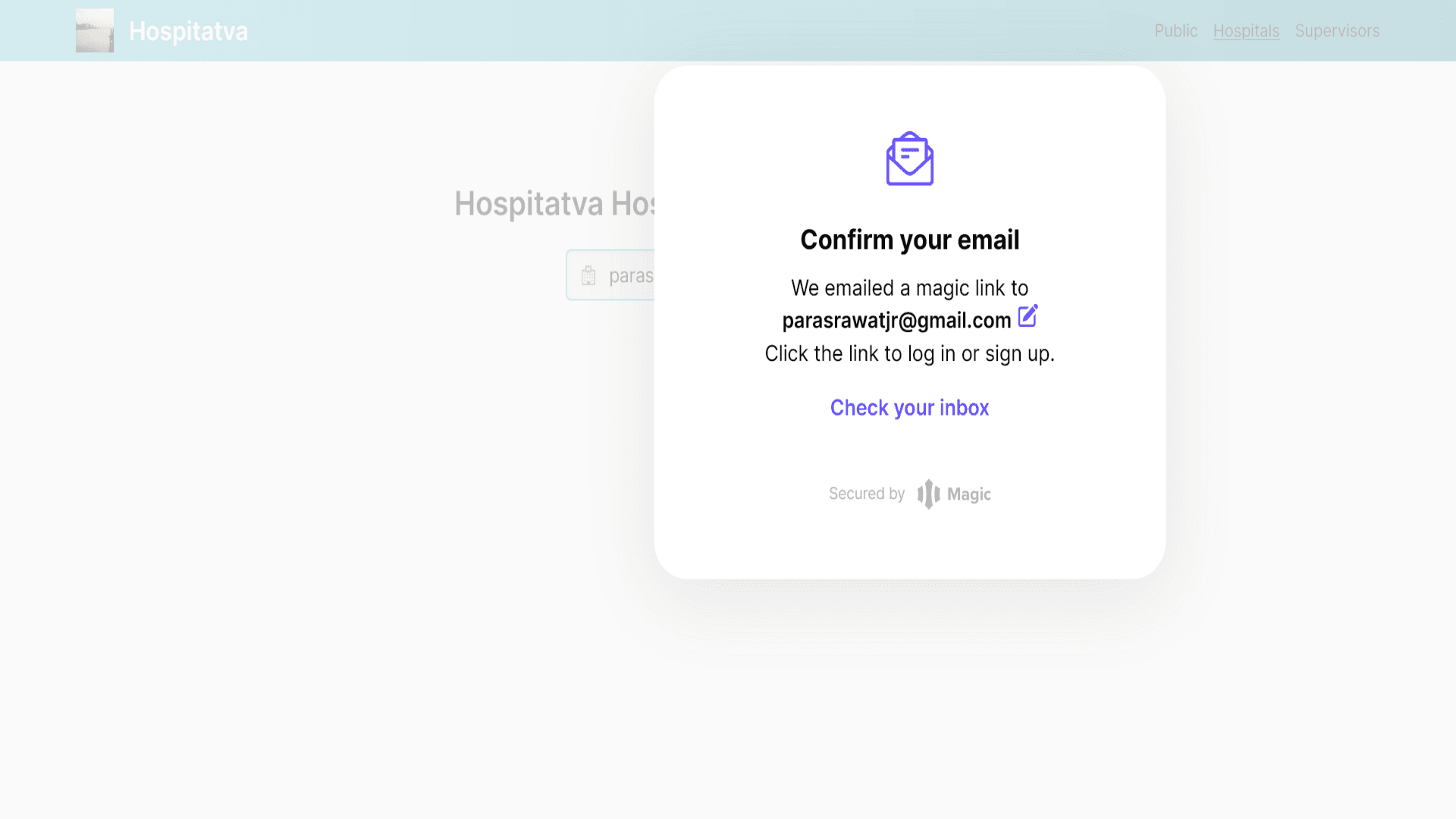
I built the frontend logic layer, which included integrating DID-based authentication via MagicLink: a wallet-native sign-in flow grounded in the Web of Trust model. The challenge was reasoning about decentralized identity at the application layer. Rather than session cookies or JWTs, authentication state was tied to a user's cryptographic identity, which required rethinking how auth context flowed through the Next.js frontend.
Hospitatva was developed for Smart India Hackathon Internals 2022 by Team HaanDoobey.